🔥 Matchstick Puzzles
Move one stick to fix the equation or shape.
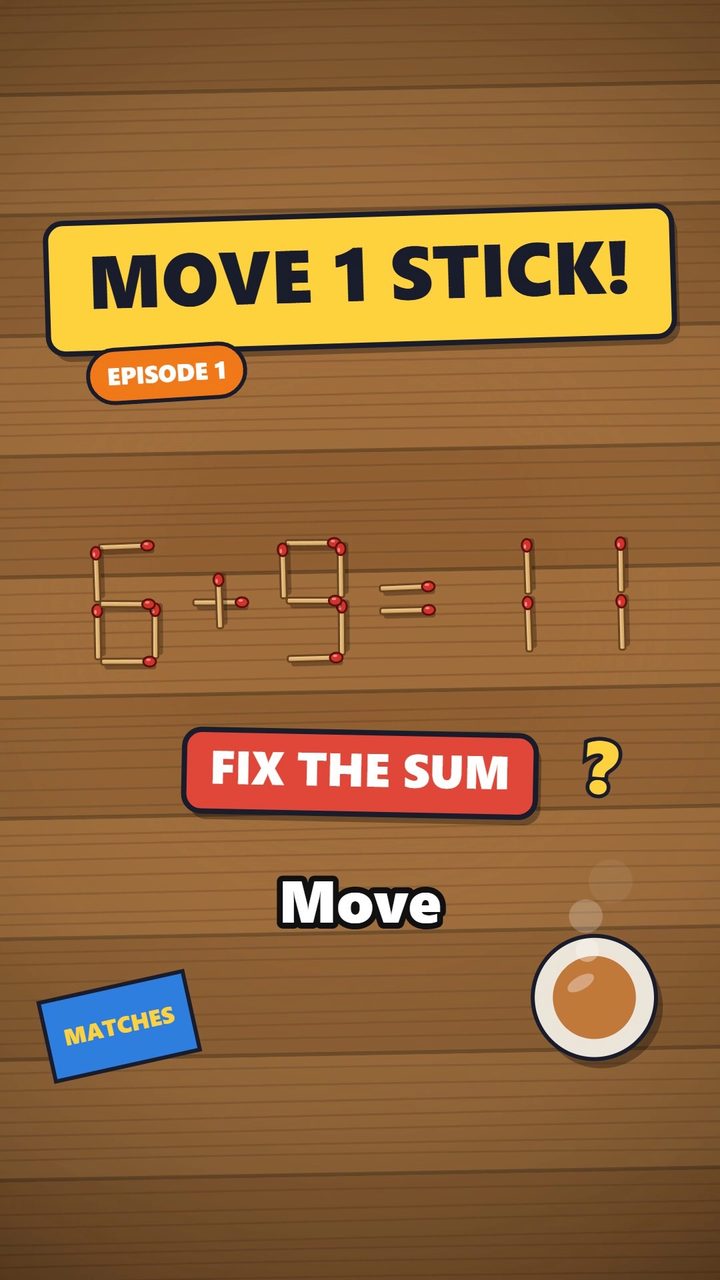
Matchstick puzzles ask you to move a single stick to fix a broken equation or change a shape into another one. The rules are simple, but the solutions are often surprising, because you must think about what the symbols could become when a stick is moved. These puzzles are a favourite among people who enjoy a clever twist.
Begin by checking which digits or shapes are close to being correct. Look at each symbol and ask which stick could be removed and where it could go instead. Remember that some symbols can be read in more than one way, and that a stick can sometimes be placed on the outside of a shape. Test each idea carefully before deciding on the answer.
For more number-based thinking, try our math puzzles or the letter sums, where the digits are hidden behind letters.
Frequently asked questions
How do you solve matchstick puzzles?
Look for the symbol that is closest to being correct, then test which stick could move to make it work. Remember that some digits can be changed by moving just one stick.
Do you have to use every stick?
Usually yes, because the puzzle asks you to move exactly one stick and keep the total number the same. Read the question carefully, since the rules can differ slightly between puzzles.
Are matchstick puzzles suitable for children?
Simple shape puzzles with few sticks suit younger solvers. Use real matches or coins to move the pieces around, which makes the idea easier to see.